
Typo-Translations of John Keats
In a recent contribution to the visual section of Asymptote, scholar and artist Johanna Drucker curated a group of translations of Keats’s poem, “When I Have Fears that I May Cease to Be,” inspired by typeface in which the text was set.
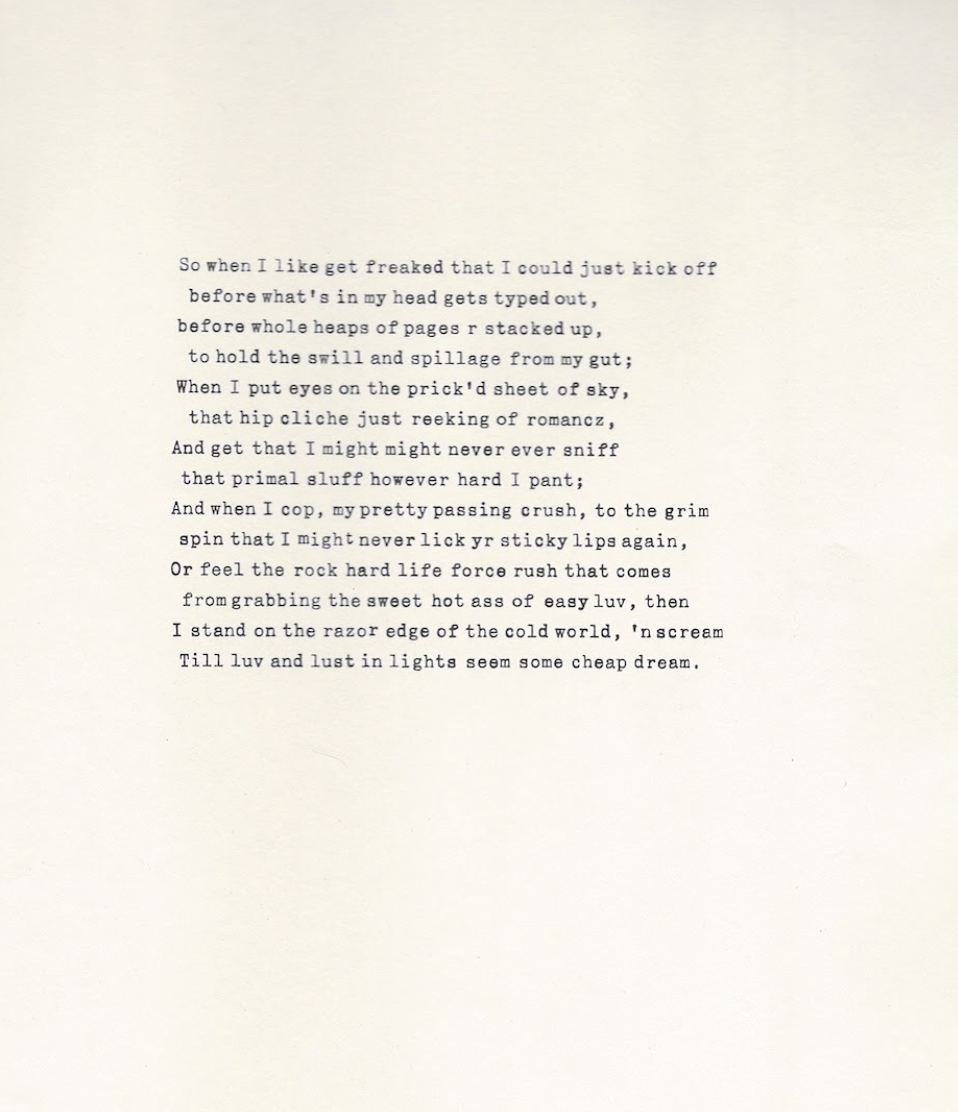
Jack Keats, Johanna Drucker. Hand-set letterpress, printed on a Vandercook, 2014.
When I have fears that I may cease to be
Before my pen has gleaned my teeming brain,
Before high-pilèd books, in charactery,
Hold like rich garners the full ripened grain;
When I behold, upon the night’s starred face,
Huge cloudy symbols of a high romance,
And think that I may never live to trace
Their shadows with the magic hand of chance;
And when I feel, fair creature of an hour,
That I shall never look upon thee more,
Never have relish in the faery power
Of unreflecting love—then on the shore
Of the wide world I stand alone, and think
Till love and fame to nothingness do sink.
—John Keats
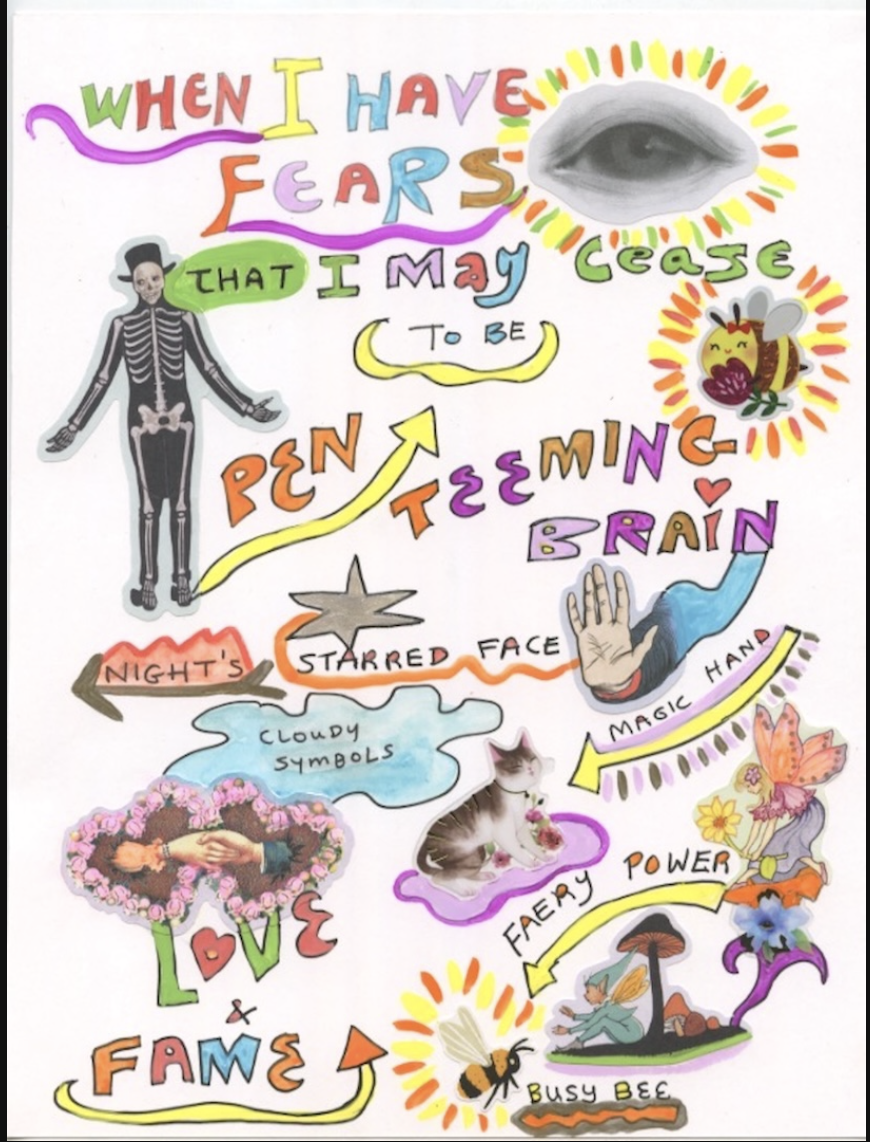
Busy Bee, Susan Bee, 2026.
Drucker writes of her process: “The principle was simple. What vocabulary/syntax choices would feel right for that typeface? What voice did it have?” The act of making typeface “more than mere presentation. . . a fundamental part of composition” has not been “central to poetic practice or pedagogy.” Drucker distinctly works against the idea that “printing should be invisible” (see Beatrice Warde “The Crystal Goblet,” 1930). She, instead, advocates for the “expressive potential of graphical inscription.”
This work by Drucker and her collaborators is an exciting example of the new ways scholars and artists are approaching and interpreting Romantic texts.
Read the full article and view Drucker and her collaborators’ visual translations of Keats’s poem in the slideshow on the Asymptote site.