“What Are You Reading?”: Yasmin Solomonescu
The Communications Fellows are excited to continue the K-SAA Blog’s “What Are You Reading?” series! Started by the 2019 Comms Team, this series aims to spotlight the research of our community members and encourage conversation around recent publications in the field. Please reach out to us if you have someone you would like to see interviewed (including yourself)!
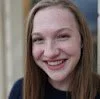
Yasmin Solomonescu is Associate Professor of English at the University of Notre Dame. She is the author of Reimagining Persuasion in British Romantic Literature, just out from Cambridge University Press, and of John Thelwall and the Materialist Imagination (2014). She is also the editor of multiple works including, with Stefan Uhlig, Persuasion after Rhetoric in the Eighteenth Century and Romanticism (2024), winner of the Jean-Pierre Barricelli Prize from the International Conference on Romanticism. With Brian McGrath, she co-edits the Romantic Circles Praxis series of critical volumes.
What new studies of Romantic-era literature are you reading right now?
Projects related to the bicentennial of Mary Shelley’s The Last Man find me reading John Havard’s intriguing Late Romanticism and the End of Politics: Byron, Mary Shelley, and the Last Men (2023), as well as political theorist Eileen Hunt’s informative The First Last Man: Mary Shelley and the Postapocalyptic Imagination (2024). As I work towards an article on puns in Percy Shelley, I am enjoying rediscovering him from a variety of angles through the essays in Percy Shelley in Context, edited by Ross Wilson (2025), and Percy Shelley for Our Times, edited by Omar Miranda and Kate Singer (2024). My interest in the intersections of literature and philosophy finds abundant stimulus in Nancy Yousef’s The Aesthetic Commonplace (2022). And I’ve been returning often, for various projects, to Mark Canuel’s The Fate of Progress in British Romanticism (2022).
Does this writing inform your current research and/or teaching?
Absolutely, in the ways addressed above. But as I pivot towards a new project on the concept of perspective in Romantic writing and perhaps beyond it, I’m also gravitating towards recent-ish works in art history, philosophy, and anthropology. Emmanuel Alloa’s The Share of Perspective (2025) and Eduardo Viveiros de Castro’s The Relative Native: Essays on Indigenous Conceptual Worlds (2015) beckon to me strongly right now, as does a re-reading of Alva Noë’s Action in Perception (2004). I hope to frame a new course soon on literature and perspective, and revisit what seems the old chestnut of “point of view” (among other things) from the vantage of this recent secondary literature.
What books are in your 'to read' pile right now? (Any period or genre!)
My perspective project revives an earlier interest in literature and science, so I am looking forward to reading Lisa Ann Robertson’s Embodiment, Aesthetics, and Ethics in Romantic Literature and Science (2025) and Sophie Musitelli’s The Sciences of the Senses in Romantic Literature: Sight, Touch, and Vision (2026). I remain very much invested in thinking about literature rhetorically (and about rhetoric literarily), so I’m keen to get a hold of James Kelly’s Irish Romanticism, Rhetoric, and Writing (2026), which shares that interest but also promises to reorient it. Topping the “to read” pile are also Frances Ferguson’s Records of Reward: Essays on Literature and Value (2026), a masterclass in theoretically sophisticated close reading and essay form, and James Chandler’s urgently pointed blend of critique and satire in The Know-Nothing Campaign Against Higher Learning (2026). For a longer nineteenth-century focus on questions of literature and (un)knowing, I want to finally delve into Daniel Williams’s The Art of Uncertainty: Probable Realism and the Victorian Novel (2024).
Which book(s) do you most frequently recommend to those starting out in Romantic-era research? Why?
My suggestions vary according to the interests of the inquirer, but the Cambridge “in Context” series is doing a terrific job of providing concise, summative but also thought-provoking overviews of particular writers from many angles, and thus supplementing the longer essays available in the Cambridge Companions series and the Oxford Handbooks. British Romanticism: Criticism and Debates, edited by Mark Canuel, offers a cross-section of critical debates across many topics, with incisive headnotes, and it’s recommended reading for PhD candidates in English at my home institution, the University of Notre Dame, but I suggest it to students individually as well.
Have there been any articles or publications recently you’d like to draw our attention to?
It’s not that recent, but the 2020 PMLA cluster on “Cultures of Argument” is a great provocative to debate about how we argue now. And my own attention has lately been drawn, on reliable recommendation, to the “Understanding Criticism” special issue of NLH (2024).
When you are taking a break from research, what genre or authors do you like to check out?
I taught Ian McEwan’s Saturday recently, about an unexpected series of events unfolding across twenty-four hours in the life of a London brain surgeon amid the lead-up to the Iraq War, and I’ve been on a McEwan kick for a while now, with both hits and misses. I recently finished Samatha Harvey’s Wilderness—the depiction of a mind giving way to Alzheimer’s was deeply moving—and I’m in the midst of the same author’s Orbital, which is astonishing on so many levels, including its plays on perspective. I am also admiringly ensconced in Will Harris’s Rendang, a series of lyrical interlacings of memory, race, and identity, and I have been also spending time lately with (the now late) Tony Harrison and with Louis MacNeice.